Average daily passenger capacity to drop from 8,500 to 7,500 between June and September
The city of Palma de Mallorca plans to reduce the number of cruise passengers during the summer period under a new agreement reached between the Balearic Islands government, Palma city council and 20 cruise companies.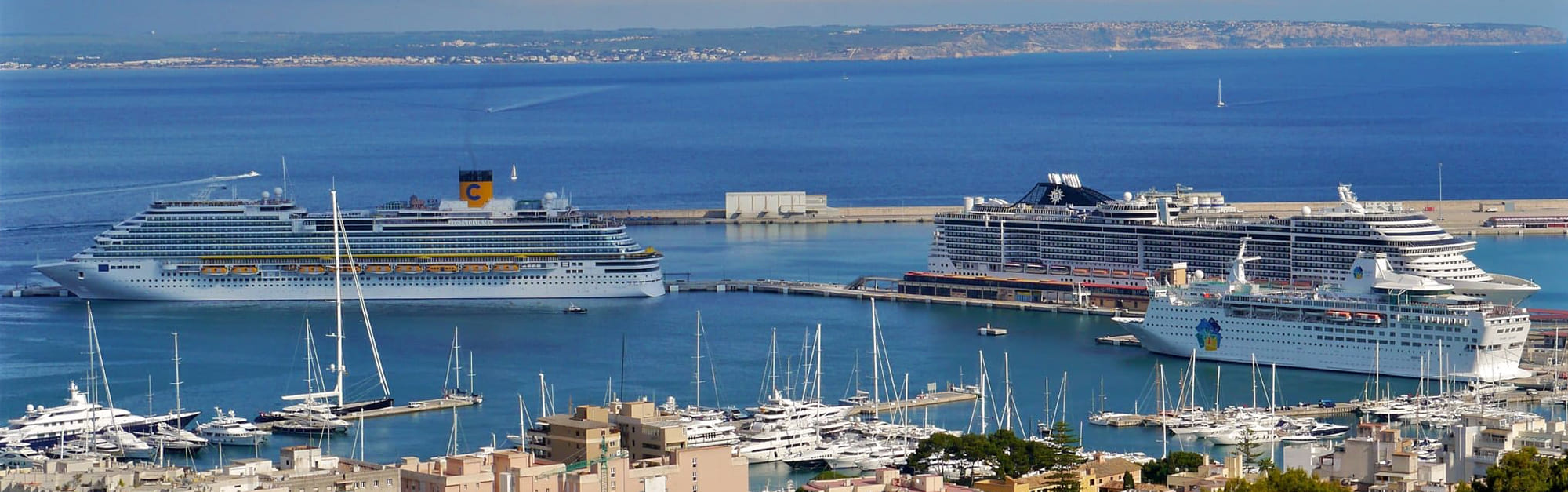
According to the agreement, in 2027-2029, the average daily passenger capacity at the port will be reduced from 8,500 to 7,500 between June and September. The limit will remain at 8,500 seats per day for the rest of the year. Although the seasonal restrictions will apply until 2029, the agreement itself is concluded until 2031.
The document was signed at the Consolat de Mar by the President of the Balearic Islands Government, Marga Prochens, and representatives of the cruise industry, led by Alfredo Serrano, President of the Spanish branch of the Cruise Lines International Association (CLIA).
The updated agreement also includes the participation of Palma City Council. Its Demographic Control Center will provide data to regulate cruise activity and protect the interests of the city, especially its historic center. It is planned to publish regular monthly reports and annual summaries on cruise ship calls at the port and compliance with the terms of the agreement.


Consultation on any issues
The signing ceremony was attended by the Mayor of Palma, Jaime Martínez, the Minister of Tourism of the Balearic Islands, Jaume Bauza, and the President of the Port Authority of the Balearic Islands, Javier Sanz.
The agreement maintains the current limit of no more than three cruise ships per day in the port of Palma, with only one of them being allowed to carry more than 5,000 passengers. A special coordination committee chaired by the Minister of Tourism is being created to monitor the implementation of the agreements, which will meet at least twice a year.
An important component of the agreement is environmental measures. Cruise lines will conduct a study of tourist movements on the island of Mallorca in order to optimize traffic flows and encourage visits to alternative destinations. In the event of a drought in Palma, cruise ships will be prohibited from replenishing drinking water supplies in the port.
Priority will also be given to ships with zero emissions or those using transition fuels such as liquefied natural gas (LNG), methanol or hydrogen, and can connect to shore power in port. In addition, cruise lines have committed to reducing waste and designing routes in a way that avoids damage to Posidonia seagrass beds.
Alfredo Serrano, President of CLIA Spain, highlighted the industry's environmental progress:
“In 2019, before the COVID-19 pandemic, Palma had 23 days with four or more cruise ships in port at the same time. Compared to that year, the number of ship calls in the high season has decreased by 18% and water consumption per passenger has decreased by 40%. Today, 30% of cruise passengers travel on LNG-powered ships. Although cruise lines do not build their own ships, the industry is actively working to improve energy efficiency and reduce resource consumption, aiming to move to zero emissions using renewable energy in the coming years.”
Consultation on any issues
You can also book cruises on our website:
Other news
Announcement of the new Viking round-the-world cruise 2027–2028!
Announcement of the new Viking round-the-world cruise 2027–2028!
MSC World Asia is a new level of cruise entertainment from MSC Cruises!
Today, MSC Cruises unveiled details of new entertainment areas on board MSC World Asia!
Royal Caribbean to open beach club in Santorini!
Royal Caribbean to open beach club in Santorini!
Celestyal celebrates record season in the Mediterranean and Adriatic!
Celestyal celebrates record season in the Mediterranean and Adriatic!