In November 2025, the world witnessed with its own eyes one of the most ambitious projects in the field of culture and tourism - the opening of the Grand Egyptian Museum (GEM) on the plateau near the pyramids in Giza. This is not just a museum - it is a kind of portal to the heritage of Ancient Egypt, which brought together under one roof thousands of artifacts, modern architecture, innovative technologies and powerful tourism potential.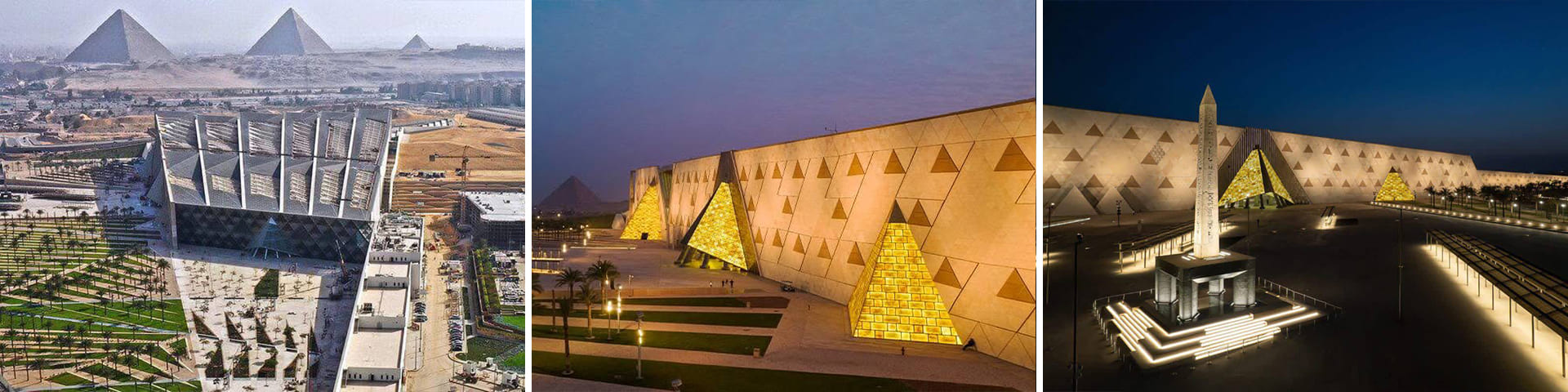
The archaeological museum, located near the Giza Pyramids and the Great Sphinx, took over 20 years to build. It is the largest museum in the world dedicated to a single civilization, covering almost 50 hectares, including gardens and open spaces. The collection of Pharaoh Tutankhamun alone consists of over 5,000 objects, many of which are being exhibited for the first time.
For Four Gates Group, it's a gold mine of new itineraries, exclusive cruise offers, VIP tours and corporate travel. In this article, we'll delve into all the details – the architecture, the innovations, the most exciting exhibits, interesting facts and the prospects for the tourism business.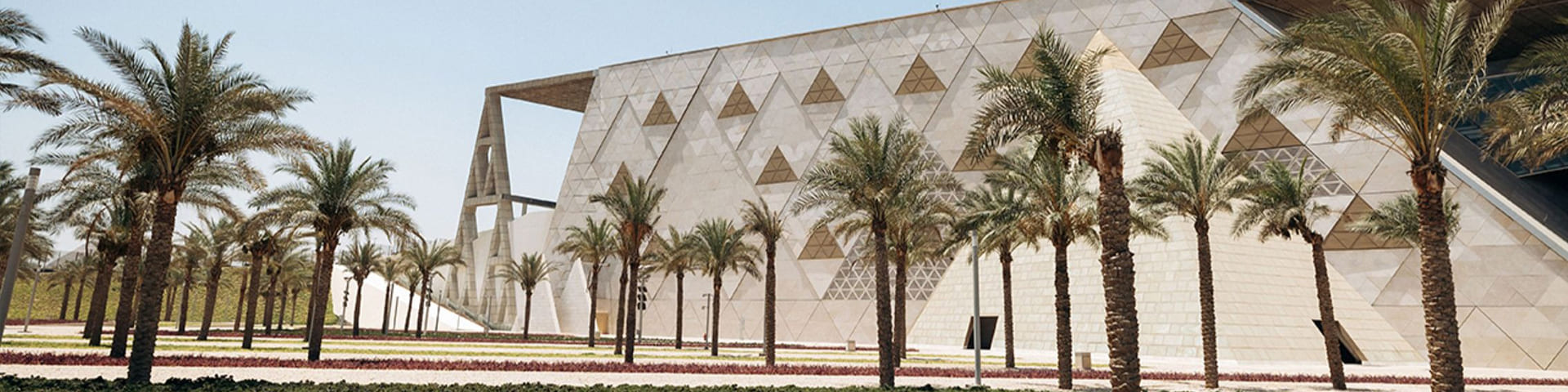
Architecture: combining memory and modernity
The architecture of GEM is designed in such a way that the museum does not just stand next to the pyramids - it dialogues with them.
• The project, implemented by the Heneghan Peng Architects studio, was selected from more than 1,550 works from 82 countries.
• The building has a truly thoughtful form: it “fits” into the landscape so as not to rise above the plateau, but to create a context for interaction between the Nile Valley, the plateau and the building itself.
• The facade is made of transparent alabaster and glass, a large area of glazing allows you to see the pyramids directly from the museum atrium.
• The landscape around the museum, designed by the West 8 team, draws inspiration from the Nile - its smoothness, natural lines, the symbolism of water and desert.
• Engineering solutions: the museum has a facade wall about 800 m long, which rises to 40 m in some places.
• It should be noted that among the architectural principles is the “anti-block” approach: the building is not a simple white cube, but an active element of the environment.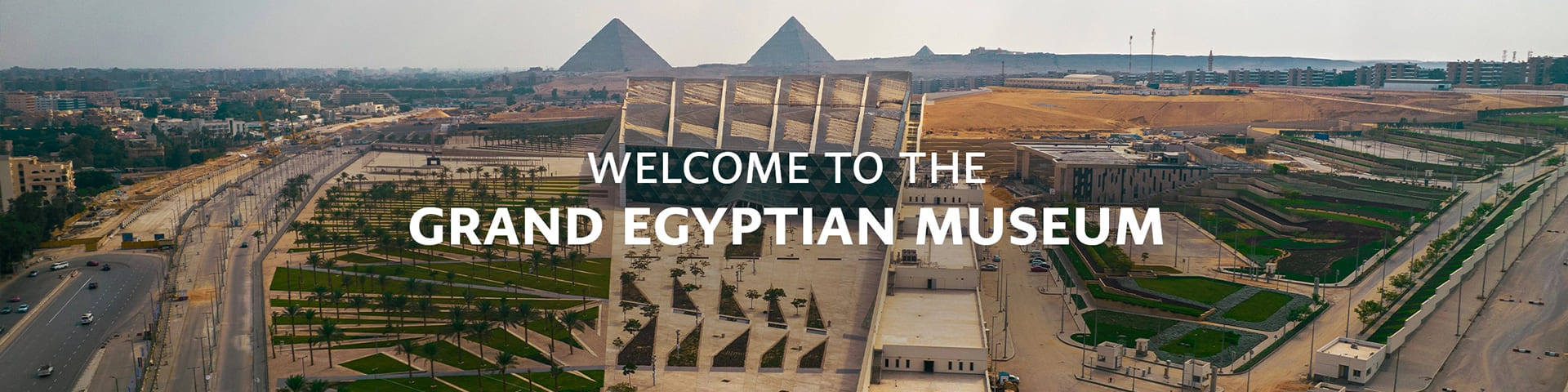
«GEM is the antithesis of the white cube — a building in constant, animated dialogue with the objects it contains and the landscape in which it is situated.» — цитата із спеціалізованого видання.
This architectural approach makes the museum not just a place to view artifacts, but an experience—a walk through history, nature, light, and form.
Consultation on any issues:


Innovation: technology at the service of culture
GEM is not just a museum with ancient statues and sarcophagi, it is a laboratory of the future for museology.
• The project actively used BIM (Building Information Modeling), 3D modeling and high-precision construction planning.
• Engineering and technology partners, in particular Buro Happold and Arup, designed passive climate control systems and energy-efficient infrastructure.
• A conservation center is also planned - one of the largest of its kind in the Middle East, equipped with restoration laboratories, storage facilities, and a communication tunnel with the museum.
• The exhibitions include interactive multimedia zones, augmented reality (AR), and multimedia shows - which allows you to attract young people, Generation Z, who are accustomed to digital content.
• One of the media outlets noted that “the language that Gen Z uses” was taken into account when developing the halls.
This means that the museum doesn't just preserve the past—it presents it through a contemporary lens, creating an experience that meets the expectations of the digital age.%20%E2%80%94%20%D0%B2%D1%96%D0%BA%D0%BD%D0%BE%20%D0%B2%20%D1%82%D0%B8%D1%81%D1%8F%D1%87%D0%BE%D0%BB%D1%96%D1%82%D0%BD%D1%8E%20%D1%86%D0%B8%D0%B2%D1%96%D0%BB%D1%96%D0%B7%D0%B0%D1%86%D1%96%D1%8E.jpg)
Collection and exhibits: what to see
That's what's most impressive — the artifacts, their history, and their place in the museum.%20%E2%80%94%20%D0%B2%D1%96%D0%BA%D0%BD%D0%BE%20%D0%B2%20%D1%82%D0%B8%D1%81%D1%8F%D1%87%D0%BE%D0%BB%D1%96%D1%82%D0%BD%D1%8E%20%D1%86%D0%B8%D0%B2%D1%96%D0%BB%D1%96%D0%B7%D0%B0%D1%86%D1%96%D1%8E%20(1).jpg)
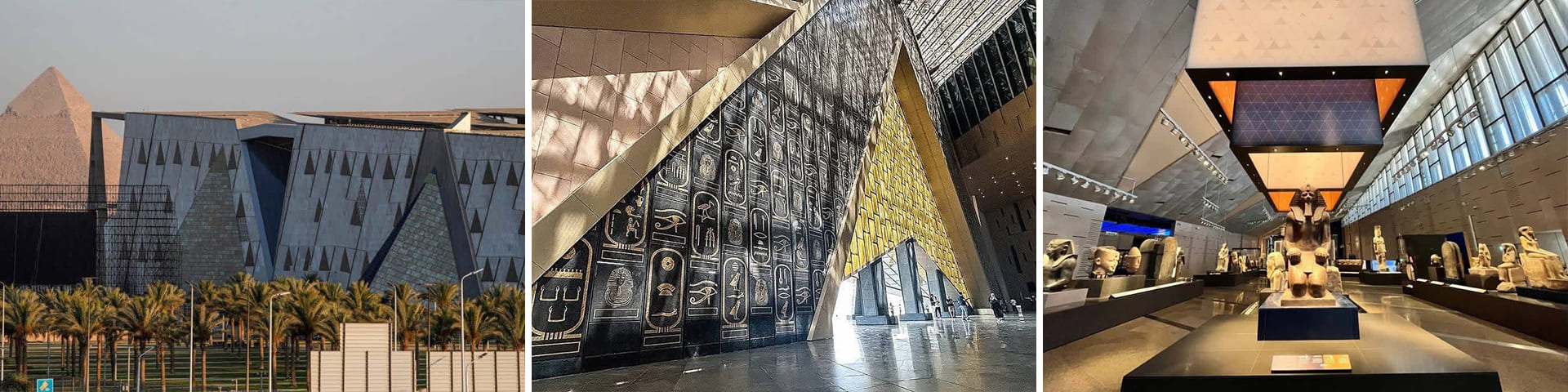
• Over 100,000 objects covering the period from predynastic Egypt to the Roman era are collected in one place.
• Exhibition dedicated to Tutankhamun: more than 5,398 artifacts from his tomb are shown together for the first time.
• The grandiose colossus of Pharaoh Ramses II — 11 meters high, weighing 83 tons — is located in the atrium of the museum.
• Exhibit: the almost 4,500-year-old barque of Pharaoh Khufu (Cheops) — one of the oldest wooden ships, exhibited in a separate area.
• Structurally and thematically, the museum is divided into 12 main halls:
- For example, halls No. 1-3: prehistoric and early dynastic eras;
- Halls No. 4-6: Middle Kingdom;
- Halls #7-9: New Kingdom;
- Halls #10-12: Late Period, Hellenistic, Roman Period.
• Children and Families: “Children's Museum” — an interactive zone with games, AR experiences, interactive boxes.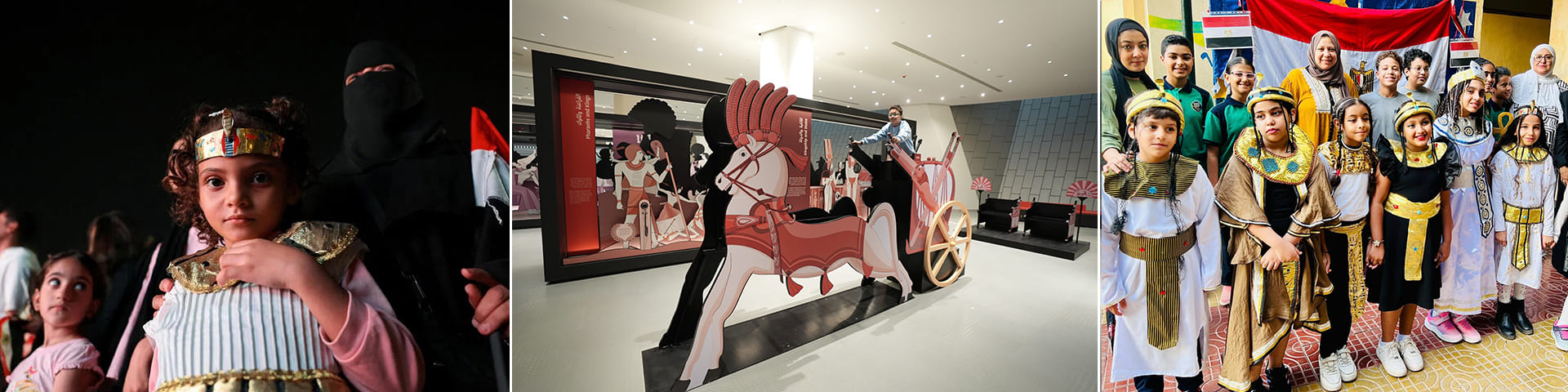
These facts create more than just a museum exhibition - it's a journey through the ages, where you stand before a thousand-year-old history, but through the screen, light, sound, and interactive elements, it comes to life.
Consultation on any issues:
Interesting facts that fascinate
• The foundation of the museum is designed taking into account seismicity - the building has a subsystem of basic insulation, which allows it to “smoothly” respond to soil movements. (This is part of modern engineering solutions)
• The facade wall is huge, almost 800 m long, made of transparent alabaster, which changes shade depending on the lighting.
• Moving the colossus of Ramses II: in 2006, the statue of the heavy-handed pharaoh was transported through Cairo - an event that symbolically foreshadowed changes.
• A view of the three pyramids - the Pyramid of Khufu, the Pyramid of Khafre and the Pyramid of Menkaure - opens from the atrium of the museum, which creates the effect of a “continuation” of the ancient civilization.
• The museum provides excursion routes for VIP guests - with private access, overnight stays in hotels on the plateau, open-air events. This aspect is not yet widely advertised, but is already being discussed in the travel industry.
• One of the sections contains artifacts that have never been exhibited to the public before - this is a real sensation for collectors, researchers and tourist enthusiasts..jpg)
Tourism and business dimension: what does it mean?
For the tourism market and for Four Gates Group, this location is a strategic point.
• GEM is expected to become one of the main tourist magnets for Egypt, helping the country reach 30 million visitors annually by 2030.
• For Four Gates Group:
- Individual premium tours: include an exclusive visit to GEM, photo shoots near the pyramids, private excursions in Russian/Ukrainian.
- MICE events: organize corporate meetings, presentations or dinners on the territory of the museum or near it - with elements of a cultural program.
- Cruise itineraries: combine a visit to GEM with a Nile cruise, stops in Luxor, Aswan, with a transfer to the 新 Sphinx International Airport (which is located nearby).
- Concierge service: VIP transfers, early entry, after-hours private tours, exclusive souvenirs.
Tips for visitors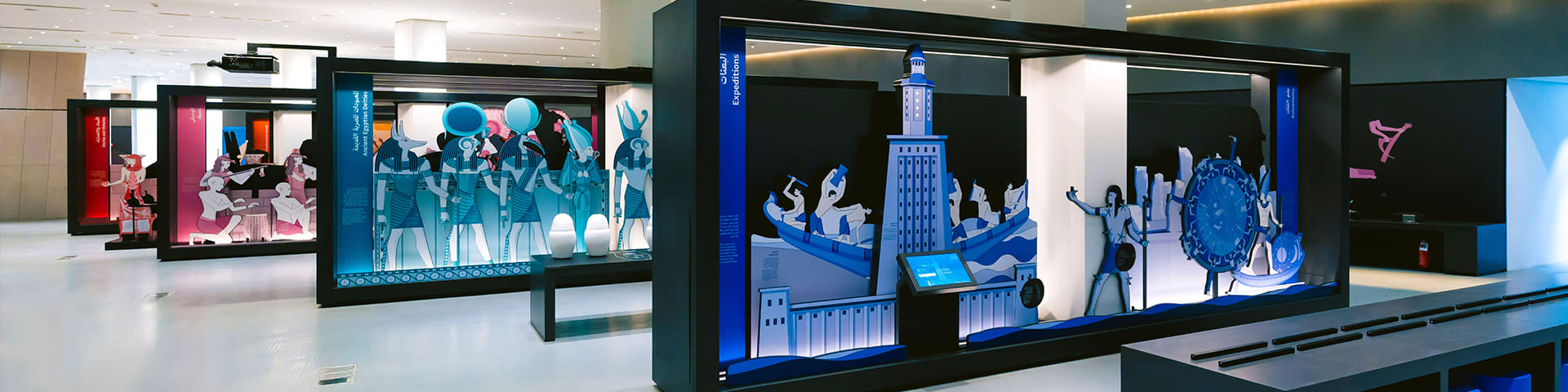
• Plan an early visit — right after opening or on the first day after the start of the excursion season to avoid crowds.
• Choose hotels on the Giza plateau — closer to the museum, with a view of the pyramids.
• Book tickets in advance — popularity is high, and for VIP tours it is better to agree in advance.
• Do not limit yourself to just the museum: include the pyramids, the Sphinx, the new Sphinx airport, a viewing point for the sunset in the itinerary.
• For an audience in Russian or Ukrainian — check the availability of guides, or book a private tour through Four Gates Group.
• Bring a good amount of memory for your camera or smartphone — the museum space gives you a lot of Instagram-scenes, take pictures of the facade, atrium, the colossus of Ramses, views of the pyramids.
Prices for entrance tickets to the museum:
- Adult (Egyptian) - 200 LE (≈ 4,20 USD)
- Students, children, pensioners (Egyptians) - 100 LE (≈ 2,10 USD)
- Adults (foreigners) - 1 200 LE (≈ 25,20 USD)
- Students, children (foreigners) - 600 LE (≈ 12,60 USD)
Conclusion: Why it's worth it
GEM is not just a museum “to see.” It is an experience that combines history, present, and future.
Consultation on any issues:
How to book a cruise?
Choose your cruise on the website or contact our cruise experts at Four Gates Group:
info@4gates.com.ua
+38 044 337 82 01
+38 093 653 05 53
+38 066 653 05 53
Other articles
MSC for Me: A Free Cruise Guide in Your Pocket
MSC for Me: A Free Cruise Guide in Your Pocket
Costa Cruises Online Registration via the website.
Costa Cruises Online Registration via the website.
Visas for citizens of Ukraine (with biometric passport)
Visas for citizens of Ukraine (with a biometric passport)
Fuel surcharge on cruises: how is it calculated and how to save?
Fuel surcharge on cruises: how is it calculated and how to save?